Emotional Conditioning: The Initiator of it all
It happens in the smallest moments. You’re halfway through a decision, a message half-typed, a truth you almost told. Suddenly you freeze like your body is waiting for someone’s permission. Sounds familiar? The feeling when o one’s in the room but somehow there’s still an audience. That pause. That hesitation. That’s history, sweetheart. It’s the body’s way of saying, “We’ve been here before.”
Every borrowed skin starts with a moment like this. When instinct pushes forward and emotional conditioning yanks you back. You tell yourself you’re overthinking but really you’re just remembering the rules you once created: Don’t be too much. Don’t say it like that. Don’t ruin the peace you worked so hard to fake. And before you know it, the real you steps aside to let the safer version take over. The polished one. The one who knows how to smile through discomfort, how to word things professionally. You might call it maturity but nervous system calls it self-defense.
Here’s what psychology tells us: the amygdala brain’s built-in alarm system, can’t really tell the difference between an emotional threat and a physical danger. It doesn’t care whether it’s a bear or a breakup. It just knows safety is at stake. So before you can even name what you feel, your body quietly hits protect. Frankly it works. Until it dosen’t. Because once the danger is gone, the defenses don’t always retire. Take a people-pleaser for instance. The one who still apologizes in safe spaces or an overthinker who still scans harmless texts for tone or an over-achiever who still confuses exhaustion with worth.
We like to think we’re self-made. But what if the ‘self’ we’ve been perfecting was never freedom but protection in prettier clothes? What if every approval we chased, every punishment we avoided, every unspoken rule that taught us which parts of us were allowed to exist wasn’t random but conditioning disguised as character? Tell me, if every version of you was built to protect you then who are you when you no longer need protection? When there’s no danger left to borrow from, no role left to play, no skin left to wear?
What if the person you have spent your whole life becoming is the very thing standing between who you are and who you are yet to become?
The Inherited Instincts: How Home Shapes the Childhood Psyche
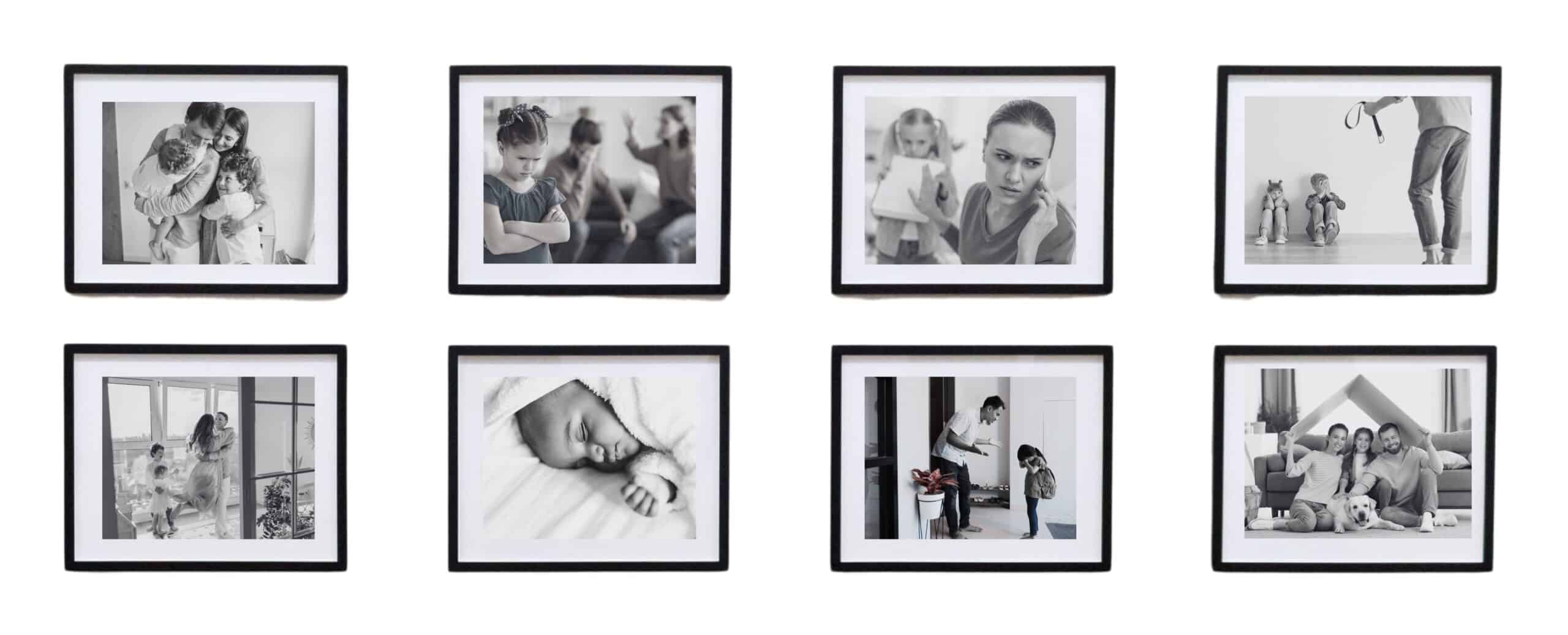
Everyone thinks their story begins when they become conscious. When they make their first real decision, fall in love or get their first heartbreak. But what if I tell you who you are started long before that? Before you had a name for all of your emotions, you already knew which ones were safe to show. Before you spoke your first word, you already learned what silence costs. Fetuses absorb their mother’s stress hormones. Downloading family drama in 4K.
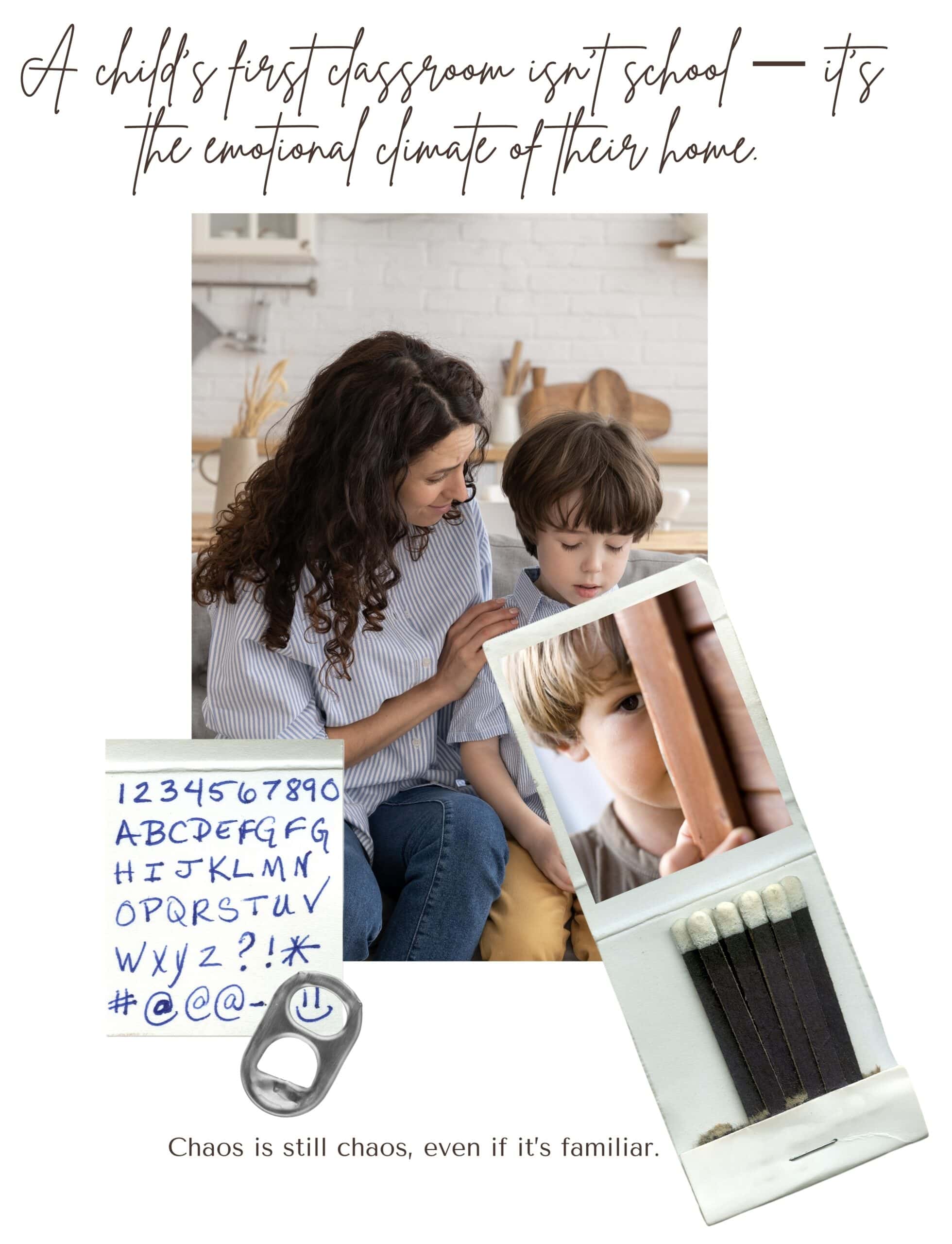
You see, a child’s first classroom isn’t school. It’s the emotional climate of their home. A child learns at a very small age how loud is too loud, how quiet counts as peace, when to laugh, when to disappear, when to pretend it doesn’t hurt. That’s how we all learned life before language. Study atmosphere because emotional algebra was unfortunately a mandatory subject.
A child who grows up in tension learns to read the room before it can read a book. Even in loving homes, control often replaces connection. When parents feel powerless from their own unhealed stories, they cling to control as proof they’re not failing. Every look, sigh or withheld affection becomes a behavioral map for a child: If I do this, love stays. If I do that, love leaves. That is how a child learns performance. I mean no parent wakes up planning to wound their child. But you see, pain teaches louder than intention ever will. This is called the intergenerational transmission of trauma. An emotional DNA passed down in silence.
A parent punished for anger raises a child afraid of honesty.
A parent who equates control with safety raises a perfectionist.
A parent who confuses attention with love raises an over-giver.
When a child feels fear, the body records it. That’s not drama. It’s neuroscience and once you learn to survive you never stop. Graduating from that classroom? Nearly impossible as the syllabus always updates.
Stress hormones like cortisol leave somatic bookmarks that tell the nervous system: “Never again.” So the next time anything that resembles that fear, the body overreacts. Not entirely because of the event happened in that instance but because it remembers the emotional conditioning that was fed a long time ago.
What was once survival becomes identity. What was once instinct becomes personality. That’s why some adults still apologize for existing. Their body thinks it’s still six years old, holding its breath at the sound of footsteps.
Therapy calls it trauma. But in a lot of households it goes by tradition. You didn’t sign a contract, you absorbed a code. It is called implicit learning. Where rules are absorbed without awareness.
As we grow old the brain gets wired and these rules become our entire nervous system. Since the brain craves familiarity more than happiness, it replays the same story with new faces. That’s why most people repeat what they swore they’d never accept.
It’s called the repetition compulsion: the nervous system’s misguided attempt to recreate old pain, hoping to master it this time. The old patterns we rehearsed all their lives without knowing. And people still think babies just sleep and drool.
No parent teaches damage, they just recycle what kept them safe. Every parent believes they’re starting fresh but really they’re just updating an old code. One written before memory, passed down in tone, glance, and timing. That’s how inheritance really works: not through property but through patterns. Congratulations! Sweetheart, you didn’t just get your mother’s eyes, you got her coping mechanisms too.
But you know what is the cruelest part of it all? It feels normal because we were told it is normal. What we forget is, Chaos is still chaos, even when it’s familiar.
If you can’t remember your childhood, just watch how you react in certain senarios that challenges you in the samllest way possible. You might behave exactly the way your parents once did with you. That’s where your childhood still lives. In the oldest rooms where our body learned what love, danger and silence were supposed to mean. Because some rooms echo louder than memories.
So think again, if home is suppose to remind us what safety feels like, why do so many of us spend most of our lives trying to find it outside?
Teenage Architecture: How We Learn to Hold Ourselves Before the World Does
We all remember our teenage years like a fever dream — a little blurry, a little loud, half tragic, half iconic. But if we look closer we will find that it wasn’t chaos at all. In fact, it was construction. That was the decade when we learned how to carry ourselves through rooms that didn’t even have the capacity to hold us.
Adolescence was never meant for freedom; it was rehearsal more so training for a cause. We thought we were figuring out who we are but we were learning who to be so we wouldn’t get eaten alive. This process is called individuation — when identity stops being inherited and starts being created.
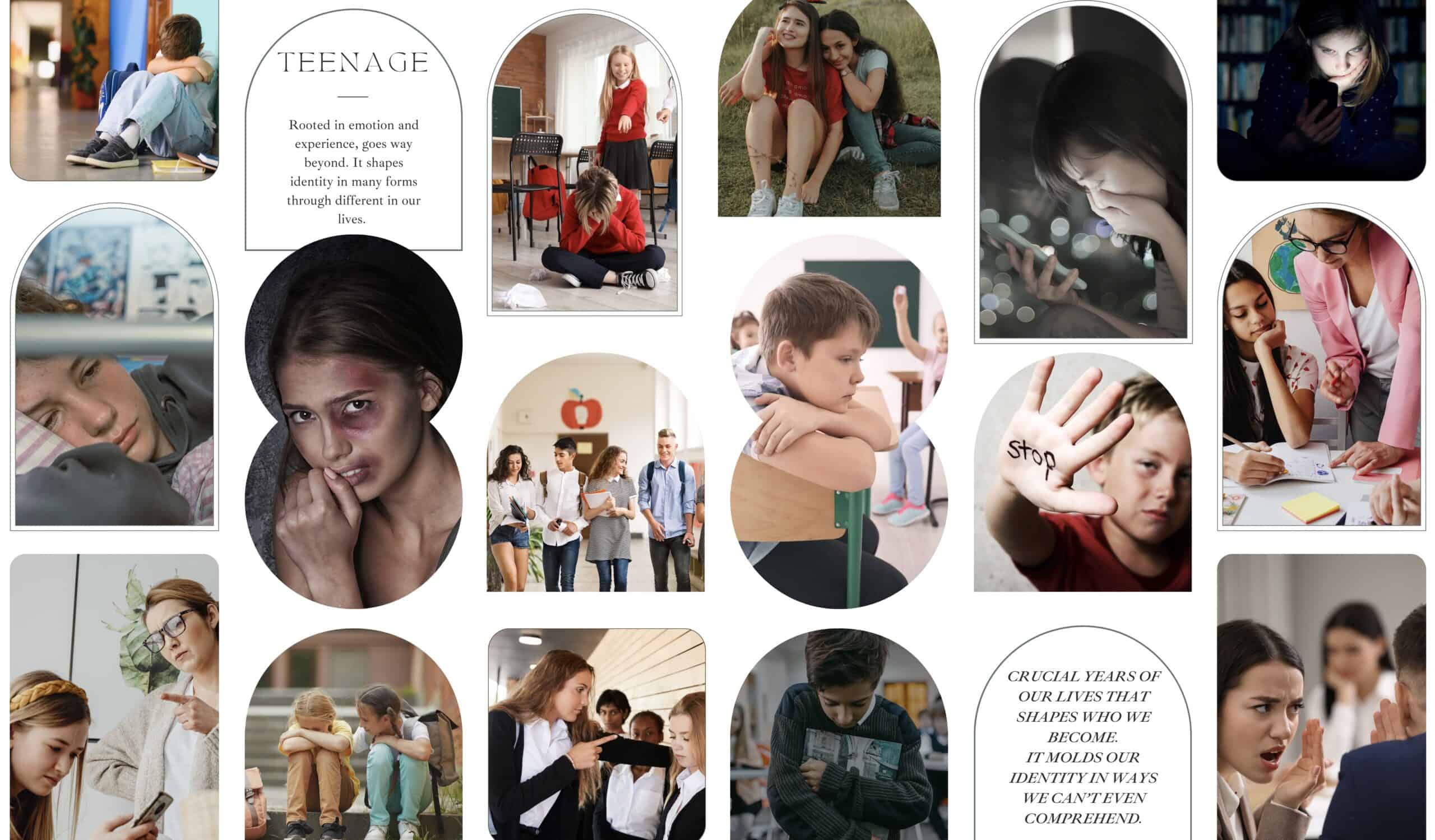
Let’s start with the obvious the Bully. The loud one, the hallway shrinker. Bullies were not born cruel. They were create to be that way. The one no one listens to unless it comes out sharp or loud. They usually are the smallest voice in the loudest room or a punching bag both metaphorically and literally.
So, they learn that fear may not give you love but it will give you power. The brain develops a shortcut in their later years: Power equals safety. And that’s how their psyche bends. It takes the hurt and flips it, thinking domination will make it disappear. Spoiler: it’s just panic with better posture.
Then there’s the Bullied. The quiet one who folds themselves into the smallest version possible. They aren’t born fragile either; they just learn that shrinking gets you through the day with fewer bruises. The brain, kind as it is, mistakes invisibility for peace: If they can’t see me, they can’t hurt me. So the nervous system starts choosing smallness as survival.
Fast-forward to adulthood and you’ll still see it in people who say ‘no worries’ while silently bleeding. They’re not shy — just professionally trained in not existing too loudly. And yes, they still apologize to chairs when they bump into them. But sometimes this can cause a repel affect. Sometimes a person who was once bullied becomes the bully itself.
Next comes the Sidekick. The loyal shadow orbiting someone brighter, louder or scarier. They laugh at jokes that aren’t funny, carry secrets that aren’t theirs because being close to power feels safer than being its target. Somewhere along the way, friendship turns into proximity management.
The psyche learns to equate usefulness with belonging. And decades later, this becomes the “ride-or-die” who never leaves, even when the car is on fire. It’s not devotion; it’s conditioning disguised as loyalty. They develop anxious attachment — love that confuses proximity with protection.
Then there’s the Gossipers. Fluent in whispers or survival. They don’t collect secrets because they’re malicious. They collect them because information feels like currency. When you’ve felt invisible long enough, knowing things becomes a way to matter. Gossip is basically marketing. See? I exist. I know things you don’t.
And once that trick works, the brain files it under safe. Later in life, that skill upgrades to “networking,” which is just gossip with better lighting and a LinkedIn filter. It’s social bonding theory in disguise — gossip releases oxytocin, the same hormone linked to connection and trust.
And what about the near-perfect ones? The 98-percenters, the kids who cried over a 9/10? They don’t chasing grades; they chase approval. Perfection was their insurance policy against rejection. They learned early that love comes with report cards, that achievement buys affection, so their self-worth became a scoreboard. In adulthood, this turns into workaholism dressed as ambition — people who call anxiety “drive.” They say things like “I just hold myself to a high standard” while their inner child is on life support.
On the flip side, the failing ones — the rebels, the “I don’t care” crowd. They cared too much once, until caring became exhausting. So they flipped the script: if you can’t win the game, pretend you never wanted to play. Rebellion becomes a disguise for disappointment. They learn that detachment hurts less than effort. The world applauds their nonchalance, not realizing it’s just a heartbreak rebranded as confidence. It is called reaction formation — when you act opposite to what you feel just to survive the feeling.
And finally, the invisible ones — the watchers. The ones who don’t speak but notice everything. Observation was their armor. In families where opinions started fights, watching quietly became wisdom. Their psyche learned that understanding the room was safer than being understood. So they mastered the art of reading people while never being read themselves. It’s a powerful skill — until they realize they know everyone deeply except their own reflection.
Each of these roles — the bully, the bullied, the sidekick, the gossip, the perfectionist, the rebel, the observer — they’re all just different answers to the same question: “How do I make it through this day without losing myself?” And the cruel trick is that in trying not to lose ourselves, we started losing shape. We didn’t know we were borrowing skin — identities stitched together out of fear, approval, survival, and teenage chaos. We wore them so long that by the time we grew up, we mistook them for truth.
So when you look back at that version of you — the one crying in bathrooms, laughing too loud in corridors, or pretending not to care — don’t roll your eyes at them. They were learning emotional math without a calculator. They were building your adult psyche, one nervous laugh at a time.
You didn’t become who you are by accident. You became this because, back then, it kept you safe. And safety, at that age, was the only goal.
Adulthood Manifestations: How Borrowed Skins Become Issues
Have you ever wondered why so many of our choices — that job we swore would be different, that person we knew wasn’t right but dated anyway, that friendship we kept fixing long after it broke always ends the same way? Different faces, different settings but the same ache.
Adulthood sells itself as freedom but in reality it’s where our conditioning finally gets a full-time job. Everything we’ve learned about love, worth, and survival quietly resurfaces just disguised.
Logic becomes the new armor (“I’m just being practical”).
Ambition becomes the new excuse (“Once I get there, I’ll rest”).
Detachment becomes the new virtue (“I don’t catch feelings anymore”).
The child who once tiptoed around tension now calls it emotional intelligence. The teenager who sought approval now calls it networking. We tell ourselves we’ve grown, but often, we’ve just upgraded our camouflage. Psychologists call this repetition compulsion — the unconscious tendency to recreate old emotional scenes hoping for a new ending.
But here’s the plot twist: the brain doesn’t crave happiness; it craves familiarity. So when peace finally shows up, it feels suspicious. When chaos knocks, it feels like home. That’s not weakness — that’s wiring. Our nervous system prefers what it can predict, even if it hurts.
Neuroscience calls this predictive coding — the brain’s instinct to favor patterns over pleasure, because safety once meant sameness. We repeat not because we enjoy the pain, but because the pattern feels safe.
That’s why so many adults mistake exhaustion for purpose and conflict for connection. We keep editing the same script, convinced this cast will perform it differently.
Love becomes a rehearsal of unfinished business — we call it “type.” In relationships, it looks like situationships that mimic emotional scarcity — a mirror of early unpredictability.
Work becomes a rerun of old hierarchies — we call it “ambition.” At work, it turns into power games and people-pleasing, echoes of childhood hierarchies and teenage approval loops.
Family becomes a loop of unspoken contracts — we call it “duty.” In family, it’s caretaker complexes and emotional shutdowns, inherited from the emotional temperature of our home.
Even friendship turns into an exchange of borrowed roles — the listener, the fixer, the ghost. And in friendships, it’s emotional labor disguised as loyalty, where you keep showing up for people who stopped showing up for you.
Each version feels new, but it’s just the same lesson wearing new lighting. The truth is, we don’t grow out of borrowed skins — we grow around them. And the longer we wear them, the more natural they feel. Until one day, the very habits that once kept us safe start keeping us small.
But here’s the mercy in all this: rehearsed things can be rewritten. Because awareness is the first draft of freedom. And when you finally see your patterns not as proof of failure, but as proof of survival — that’s when the real story begins.
The Everyday Masks: How Our Borrowed Skins Walk Into Every Room
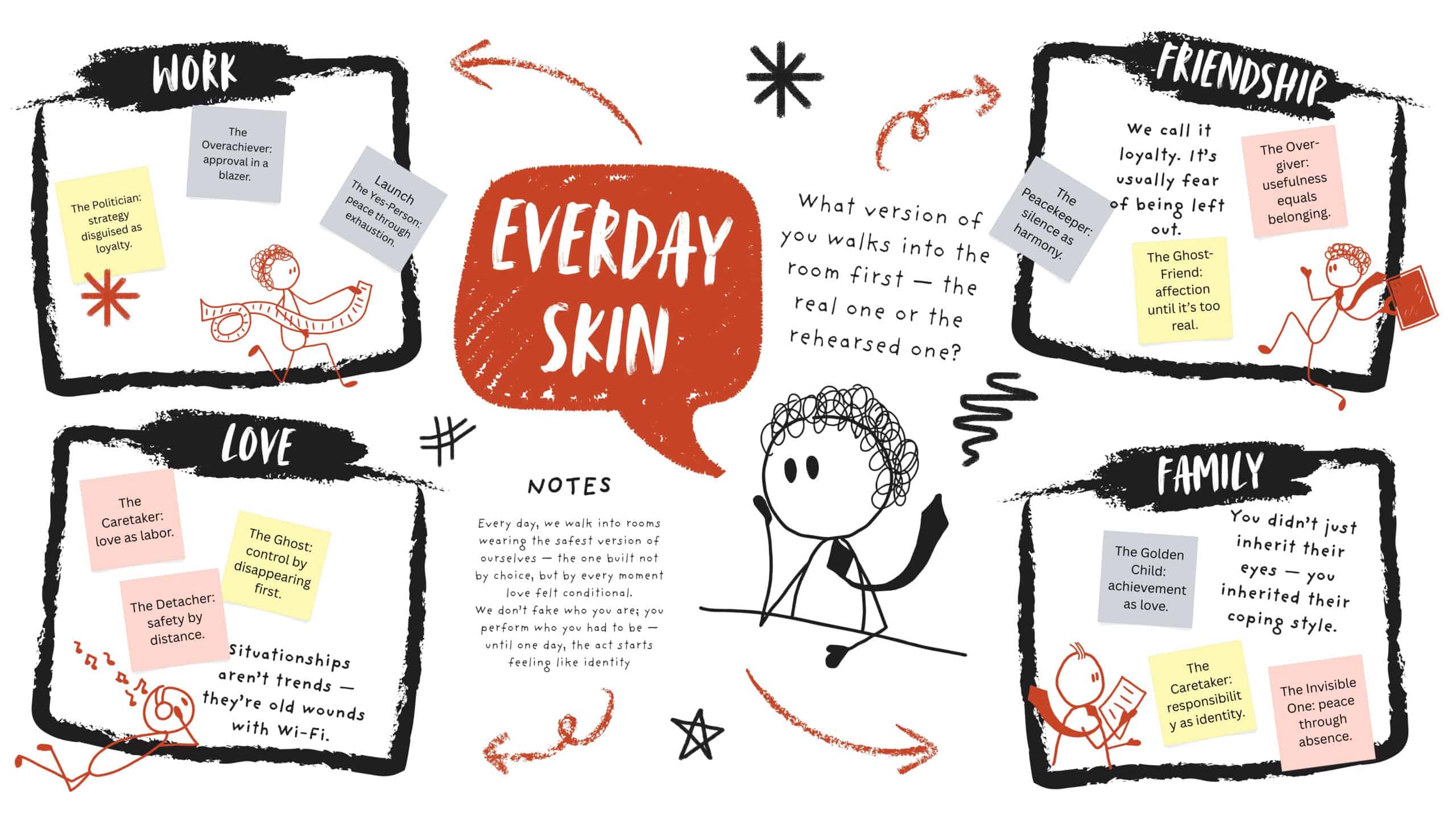
We think we’re making choices, but really, we’re following instructions we forgot we were given. The child who learned to keep the peace now runs the meetings. The teenager who feared rejection now edits their personality before speaking. The adult they became? Just a better actor in a longer play.
But maybe it’s not all tragic. Because seeing these patterns for what they are, that’s how you finally start living consciously, not reactively. Maybe the purpose of adulthood isn’t to fix the past, but to understand how deeply it still lives in you. And once you see that, you stop blaming yourself for who you became. You just start asking — who am I beyond what I learned to be?
Work: The Polished Playground of Old Fears
Nowhere does this borrowed skin show up louder than at work because adulthood loves to disguise old fears in productivity and call it ambition. You call it drive. Your nervous system calls it please don’t hate me. Most of corporate life is a group project no one asked for. Full of kids who never stopped trying to earn gold stars. That “grind culture” everyone worships? It’s not motivation. It’s fear of irrelevance with caffeine.
You chase deadlines like affection because once upon a time, love only showed up when you did something right. You over-explain emails because you once had to explain your worth. And micromanagers? They don’t love control but they do fear chaos. Somewhere along the line, unpredictability felt dangerous, so they started holding everything too tightly.
Office politics isn’t evil — it’s childhood hierarchy with better snacks. Remember the school cliques with insider jokes and silent power? Corporate life just rebrands that. The gossipers aren’t villains; they’re afraid of being invisible. They learned early that information means belonging. Gossip becomes currency, a way to feel seen without risking rejection.
The ass-kissers? Not spineless just strategic survivors. They grew up learning that praise keeps the peace. Compliments were shields, not sincerity. They don’t admire power; they fear its silence. And yes-people? They say “of course” even when their spine screams “no,” because confrontation still feels like danger, not dialogue.
You’re not addicted to work. You’re addicted to the illusion that effort guarantees love. You think you’re chasing success, but what you’re really chasing is safety. The kind that was once conditional. Psychologists call this performance-based self-worth — when productivity replaces emotional security. Neuroscientists call it reward conditioning: the dopamine rush that confuses approval for affection.

Love: When Chemistry Is Just Familiar Chaos
When chase becomes too exhausting, we look for softness somewhere else, usually in the places we call love. But love, too, becomes another stage where our rehearsed fears learn new lines. It’s not that we don’t want love; we’re just scared of what we’d have to unlearn to actually receive it. Situationships, ghosting, F-boys, chill-girls, these aren’t trends; they’re trauma responses in streetwear.
The F-boy doesn’t fear commitment; he fears intimacy. Closeness once meant control, so now he only knows how to hold people at arm’s length. The F-girl doesn’t fear love; she fears being needed. Caretaking once cost her peace. Now she confuses independence with protection, detachment with power.
Ghosting? It’s not immaturity, it’s strategy. If I disappear first, I can’t be rejected. And for others, it’s validation by vanishing “If they chase, I exist.” They don’t mean to be cruel; they’re just recreating the push-pull dynamic that once defined safety. Power feels safer than vulnerability when vulnerability once hurt.
We call it chemistry; but what it really is: intermittent reinforcement — the dopamine high that comes when love is uncertain. You don’t crave people; you crave the pattern that once made you feel alive, even when it hurt. You’re not falling in love; you’re falling into the same pattern with better lighting.
And when someone calls you “low-maintenance”? That’s not a compliment. That’s emotional under-nourishment rebranded. You learned early that needing less makes you easier to keep.
Friendship: The Softer Stage for the Same Scripts
When same patterns bleed out of romance, they don’t disappear, they just learn new names. We start calling them friendships, but half the time, we’re still negotiating the same old wounds, just with shared playlists instead of shared beds. Friendships are just unpaid therapy with snacks. We think we choose friends for compatibility but mostly, we choose them for familiarity.
The over-giver? Still trying to earn her seat at the table. Her kindness isn’t generosity. That is strategy sweetheart. If everyone’s happy, maybe she won’t be left out. She says “it’s fine” even when it burns because once, saying “no” cost her love.
The ghoster? They disappear before they can disappoint. They love you but love makes them panic. Affection feels like debt; intimacy feels like exposure. So they vanish when things start to feel too safe, because safety was never safe before.
The peacekeeper? She mistakes silence for safety. She doesn’t speak up, not because she doesn’t care, but because once, her voice made things worse. Now she trades honesty for harmony and calls it maturity.
And the over-sharer? Not dramatic just lonely. It’s easier to flood the room with stories than to risk the quiet where rejection might live. So she tells everything, hoping someone will finally listen without leaving. We call it loyalty, but it’s usually just fear wearing friendship’s hoodie.
Friendship breakups hurt because they expose what love without the romance looks like the same survival games, just with fewer red flags and more group chats. You’re not losing a friend; you’re losing a familiar emotional rhythm.
Family: The First Script That Never Stops Running
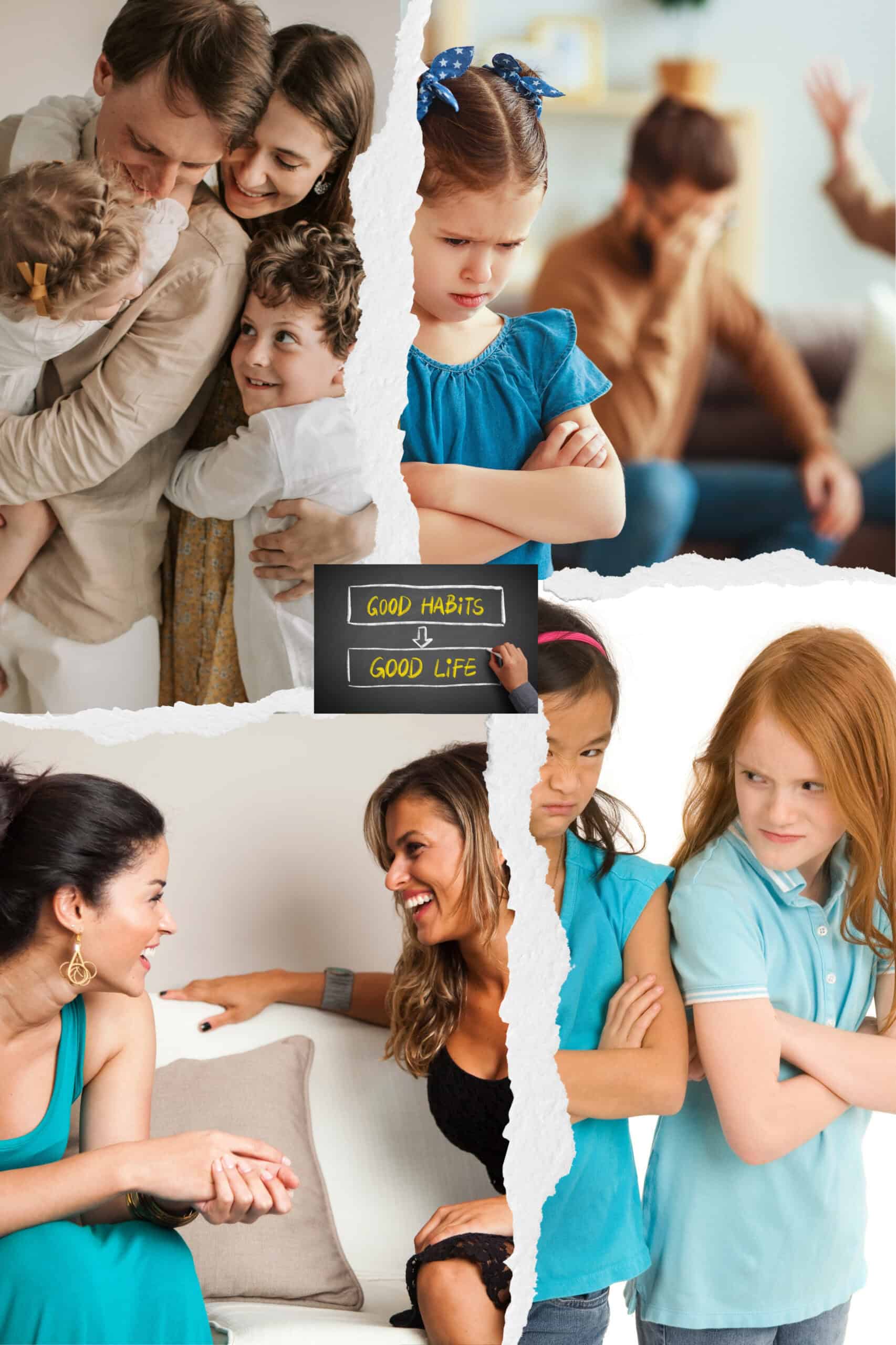
Trace those rhythms long enough and they hum the same tune. The one you first learned at home. Because before we ever joined meetings, or fell in love, or shared memes, we learned safety from the people who raised us. Families don’t just raise us, they train us. You were either the golden child (love = achievement) or the scapegoat (attention = trouble). Either way, the script stuck.
The golden child becomes the over-achiever — terrified of failure, addicted to praise.
The scapegoat becomes the rebel — allergic to authority, but secretly craving approval.
The caretaker child becomes the adult who parentifies everyone, unable to rest unless everyone else is okay.
And the invisible child? They become the ghost — emotionally present but never seen, because invisibility once felt like protection.
You didn’t just inherit your mom’s eyes; you inherited her apology reflex — the one that says, “If I stay small, no one gets mad.” You didn’t just get your dad’s sarcasm; you got his emotional unavailability disguised as humor. We call it personality. It’s actually survival memory with better jokes.
Even now, holidays feel like performance reviews. You don’t visit home; you revert. The confident adult becomes a teenager again, seeking approval from the same faces that taught them to shrink. In psychology, this is regression — the nervous system’s shortcut to safety when old dynamics resurface.
Digital Life: The New Stage for Old Scripts
And when it all becomes too much, we do what modern adults do. We log online. Because if life offline keeps poking your wounds, social media gives you a place to Photoshop them. The internet is just one big costume ball where everyone’s trauma has a PR team.
Main Character Energy. Soft launch. Self-care. We’re not lying; we’re marketing. You don’t post to show off, you post to prove you’re still here. The algorithm doesn’t reward truth; it rewards attention. So you curate, filter, and brand your breakdowns until even your anxiety looks on-trend. We call it engagement, but it’s really just your nervous system begging for applause. You’re not chasing followers — you’re chasing proof.
Proof that you’re enough, that you belong, that someone, somewhere, is still watching. You’re not seeking clout — you’re seeking co-regulation. That tiny rush of dopamine? It’s your brain whispering, “See? You still exist.” Every room we enter — office, date, family dinner, group chat, Instagram feed — is just a remix of the same old classroom. We still chase gold stars. We still fear detention. Only now, the grades are followers, promotions, and being called “chill.”
We don’t grow out of our childhood patterns — we just learn to monetize them. And maybe that’s the quiet punchline of adulthood: You’re not pretending to be someone new. You’re just trying, for once, to be someone safe.
The Real Ask: Who Are You Without the Borrowed Skin?
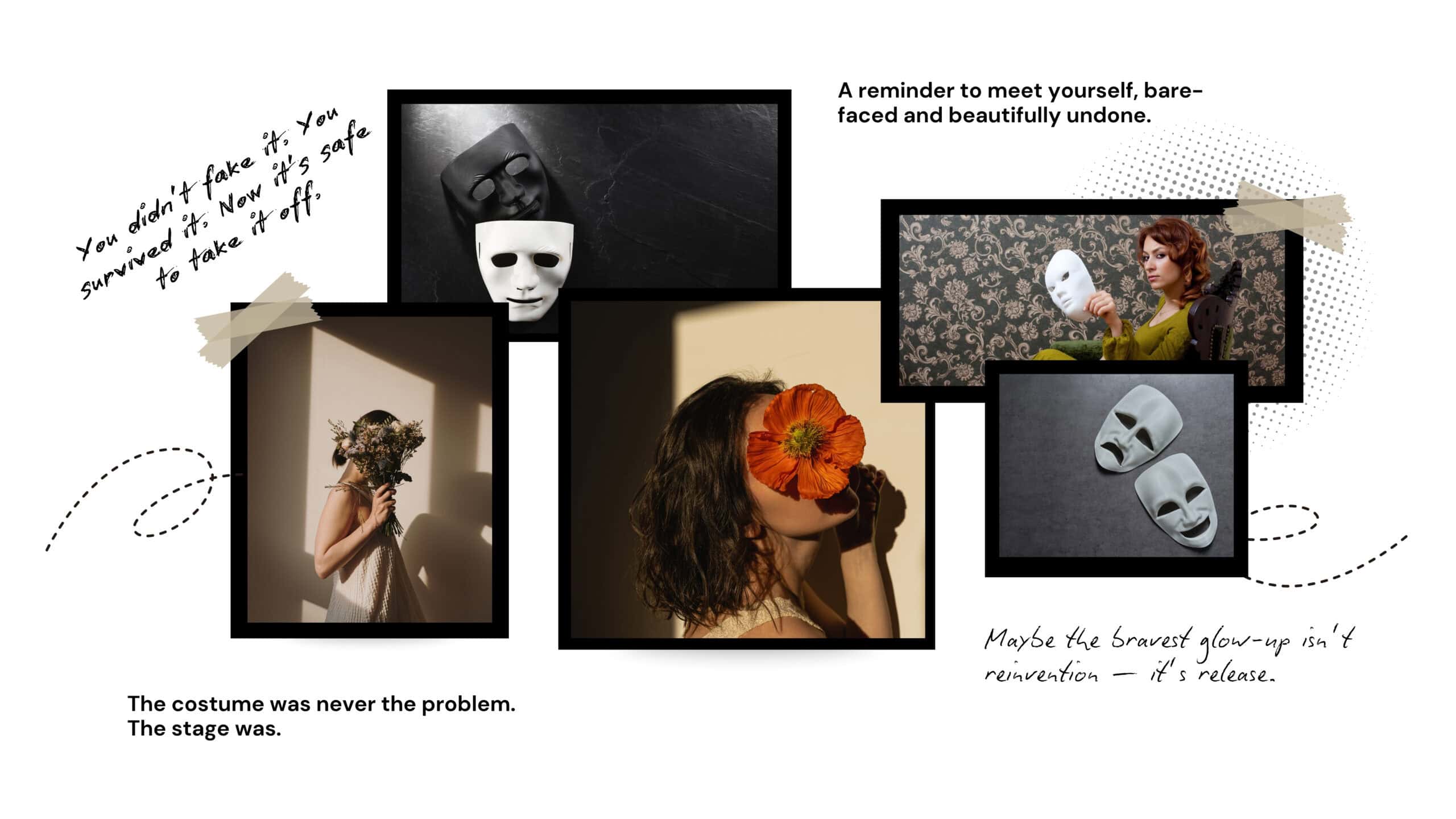
You made it. If you’re still reading, congratulations! You’ve officially survived the emotional equivalent of a wardrobe audit.
Now comes the real ask: Which of these skins are actually yours?
Not the ones you wear for meetings, or first dates, or when your mother calls the ones underneath. The good-girl calm that keeps you from crying. The “I’ve got this” tone you use when you definitely don’t. The polite laugh you pull out when you’d rather scream.
Those aren’t random habits. They’re custom-fitted armors stitched from every moment you weren’t allowed to just be.
They worked once. They got you through the chaos, the heartbreak, the school cafeteria, the boss who mistook burnout for brilliance.
But here’s the thing no one tells you: some survival stories age badly. The same armor that saved you then is now suffocating you. The same mask that earned love now filters it. And the worst part? It looks so good on you that you’ve started calling it “personality.”
Maybe it’s time to check the label. Is that confidence, or control?
Is that independence, or exhaustion dressed up as freedom?
Is that loyalty, or fear of being left again?
Half of what we call values are just coping mechanisms — passed down like family jewelry: heavy, outdated, still somehow considered classy. And before you feel guilty for wanting to outgrow them. Remember: evolution isn’t betrayal. You’re not disrespecting your past by wanting something softer; you’re just refusing to keep mistaking survival for tradition. There’s no trophy for lifelong resilience. At some point, you’re allowed to want ease.
The zero step is noticing.
The first step is admitting the script might not be yours.
And the brave step — the one martinis are made for is starting to peel it off. To stop rehearsing safety and start flirting with freedom.
Because life isn’t meant to be lived in constant damage control. You’re not a crisis manager; you’re a human who deserves to breathe without apologizing for the oxygen. If everything you do is still about staying safe, you’re not living, you’re just running a very elegant emergency drill.
So ask yourself. Which skins are you still borrowing?
And which ones have finally served their notice?
You don’t have to burn the old versions of you. Just stop renewing their contracts. And when the peeling starts. When the armor cracks and the noise quiets that’s when the real hunger creeps in. Not the kind you can feed with food, people, or another “new beginning.” The one underneath — the ache that no amount of scrolling, shopping, sex, or success ever silences.
That’s the next story — The Hunger That Isn’t Hunger — about what we reach for when we think we’re starving, and what the soul was actually craving all along. Spoiler: it’s never the thing in your cart or in your bed. But that’s for another night.
For now, finish your drink, take a deep breath, and meet yourself bare-faced, unfiltered, beautifully undone. The girl beneath the borrowed skin was never lost. She was just waiting for the room to finally feel safe enough to come out.
The plot twist was never becoming someone else. It was remembering who you were before the costume.







EMOTIONS
