When “Failure” Isn’t Failure
What happened to you? You used to be sharp.
Deadlines? Missed. Grades? Slipping. Focus? Gone. Promises? forgotten. You know what? You’re wasting your potential.
Ever heard it? Well, I have.
Maybe you’ve heard it from your parents. Maybe your boss. Maybe someone close to you. Or maybe… you’ve whispered it to yourself in the mirror. But it stings either way, doesn’t it?
It’s not entirely wrong. On the outside, it does look like fumbling. Like you are distracted now a days. The evidence is stacking up like receipts after a shopping spree. But…
What if I told you what you’re not failing at all? What if I told you it’s something trickier?
Something you can’t touch, but you can feel everywhere. Something you can’t explain in words, but it’s heavy in your chest. Something that doesn’t just convince people around you—it convinces you. Something that whispers that you’re lazy, unmotivated and careless.
Because here’s where psychology flips the script: what we see as “failure” is often just surface fallout.
The receipts aren’t the story. They’re the symptoms. And symptoms are never the full truth. That’s why philosophers call perception “a mirror with fogged-up glass”.
Once you believe the foggy reflection, you mistake distortion for the truth.

This invisible state has a name. A state that feels like failure, but it isn’t. The real camouflage. I call it, THE FOG.
Sometimes it creeps in when we’re chasing something bigger. Like stepping from who we were taught to be into who we dare to become.
And sometimes it’s shoved onto you without warning. A relationship cracks. A workplace turns toxic. A classroom becomes a battlefield of whispers and bullying.
Suddenly you’re standing in smoke you never asked for. And that’s why it’s dangerous. Whether you walked into it or were pushed.
Before it wrecks your world, it steals your clarity. It doesn’t just block your view. It convinces you there was nothing to see in the first place.
The Sticker Pack Society Slaps on You
Lazy. Unfocused. Irresponsible. Unmotivated. Isn’t it funny how society has a ready-made sticker pack for every struggle it can’t see? Of course, the label sounds tidy, logical, and easy to digest.
You miss one deadline? Lazy.
You struggle to focus in a toxic environment? Careless.
Show signs of burnout? Congratulations, you’re weak.
Labeling wears the costume of logic, and people love it because it saves them the effort of actually asking questions. Never mind that none of those labels explain a damn thing. They don’t dig deeper, they just slap the first insult that sounds right.

Have you’ve ever felt that shift? When your daily life or relationships feel “off” while everyone else is busy writing you off. You know why this matters? This isn’t an invisible battle. It’s a public trial.
And your crime? Not performing on schedule.
The labels don’t just float around; they stick. Suddenly you’re not picked for the project because you’ve been filed under unreliable. You’re not trusted with the secret because you’ve been boxed in as snob. You’re not invited to the plan because someone decided you’re not fun anymore.
Psychologists call it Labeling theory when people slap a label on you, they stop looking deeper. Bosses don’t see burnout, they see incompetence. Parents don’t see pressure, they see rebellion. Friends don’t see your silent fight, they see distance. And the fog makes it worse. Name stick, context slips.
Instead of asking why am I struggling? you mutter, I’m lazy. I’m bad at this. I don’t care enough. You wear the costume stitched for you even though it never fits.
And it kicks you right where it hurts the most. Labels feel powerful because they simplify chaos. Humans crave clarity so much that we’d rather be wrong-but-certain than sit with the unknown.
Philosophy warned about this centuries ago. Plato said names create realities, and psychology proves it: names creates realities.. identity bends toward repetition. You’ll start living like it’s true, even if reality disagrees. Remind a mind of a stereotype and performance can drop on the spot.
But clarity isn’t the same as truth. That’s why labels hurt. They don’t explain you; they erase you. They reduce a whole human being into a one-word caricature, a coffee-mug diagnosis.
When the world keeps stamping you with their words, the fog isn’t just what you feel it becomes how you’re seen.
Inside the Fog — What Brain Fog Actually Feels Like
You want clarity, right? Everyone does. Clarity in love, in work, in “who the hell am I right now?”
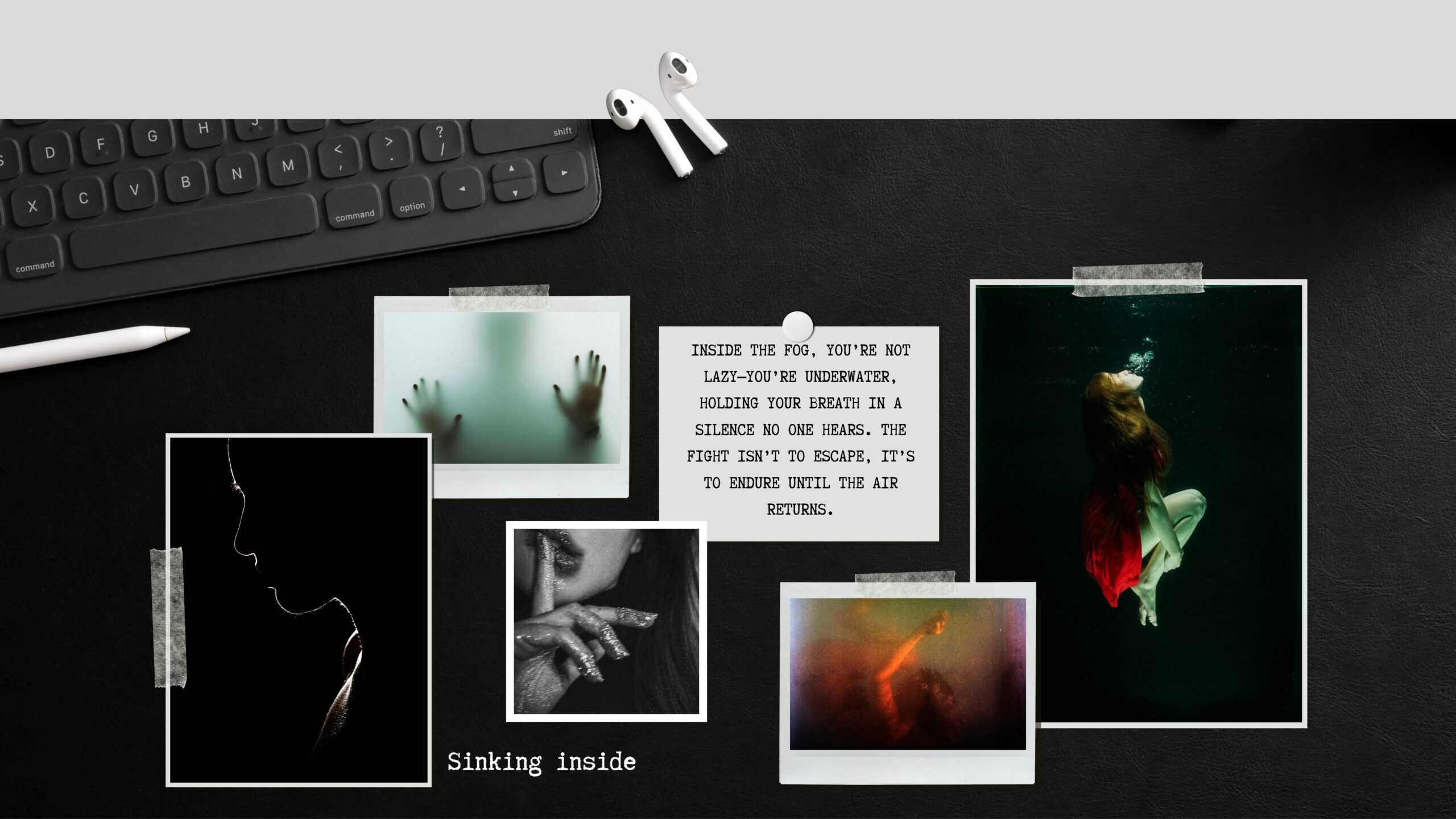
But the fog is the opposite of clarity. Acute stress can dim prefrontal clarity in minutes. It’s not laziness, it’s paralysis. You want to move, swear you do, but your brain slams the brakes and your body just… idles. It’s like dragging yourself through wet cement while your to-do list flashes neon reminders in the background.
Here’s the part no one tells you: your brain doesn’t care about your deadlines. Or your résumé. Or your perfect little five-year plan. It was designed for one thing and one thing only. Keeping you safe. Brains don’t read calendars; they read danger—safety first, spreadsheets later.
So when you don’t feel safe in your house, your relationship, your workplace or even in the time you’re in. Your brain reroutes all its power from “achieve” to “survive”. Stress hijacks the steering wheel from focus to autopilot. And that means the essays, promises, and projects get tossed in the junk drawer.
Think of it like driving through actual fog. You ease off the gas. Grip the wheel tighter. Every meter ahead is a mystery, and the only thing your body cares about is not crashing. You don’t care how late you’ll be. You don’t care who’s honking behind you. The only thought in your head is, “Please, just let me see the next five feet”.
Now imagine that fog isn’t outside the car. It’s inside your mind. Of course you can’t focus. Of course the energy feels counterfeit. Of course you stare at the screen and nothing clicks. That’s not disinterest, it’s your nervous system yanking the handbrake.
On the outside, it looks like laziness. Inside? It’s your brain running emergency drills. But instead of honoring the pause, you fight it. You slam the accelerator while your brain pulls the brake. You try to prove to yourself and to everyone calling you “weak” that you’re fine.
But the thing is, If you stopped fighting and actually participated in the pause—acknowledged it, gave it space, were a little kinder to yourself. The fog might clear faster. Two days of resistance could shrink into two hours of reset.
Here’s what most people miss: paralysis is still action. It’s your body saying, “Not this. Not now.” Psychology calls it conservation mode—redirecting energy to survival, not performance or some calls it Liminal space—the silence that makes music possible. Spiritually? Mystics call it the dark night of the soul, where autopilot is stripped just long enough for you to see yourself.
Well, irony dressed in prada!!
You think you’ve stopped. But something deeper is moving: your nervous system keeping you alive, your psyche demanding recalibration, your spirit whispering, slow down or break down.
The Roots of the Fog — Where It Really Comes From
Bullying. Betrayal. Family roles. Cultural scripts. Voluntary leaps. Forced upheavals. Time itself. Fog isn’t one-size-fits-all; it’s a state with many entry points.
It doesn’t announce itself with sirens. It seeps in. Hijacking clarity until survival becomes your only mode.

Bullying. When you’re targeted, you don’t even know what crime you committed. Wrong shirt? Wrong word? Wrong face in the wrong room? The cruelty of bullying is that it’s never about you, but it always convinces you it is. When your brain does what it’s designed to do. r It reroutes all its energy into “How do I not get hit again?” instead of “What do I want to build next?” That constant hyper-vigilance steals the bandwidth clarity lives on.
Fog doesn’t need a grand invitation; it feeds on this quiet shift from creation to protection.
Betrayal. Someone you trusted decides your loyalty is disposable. A friend spills your secret, a partner cheats, a colleague sells you out. Suddenly trust the lens that gave life shape shatters. And when trust collapses, clarity collapses with it. The fog thrives here, not just in the heartbreak, but in the rewiring. It convinces you the problem isn’t what they did, it’s who you are. You should’ve known. You must’ve deserved it. That’s the parasite thought, and it fogs every decision after.
Parental pressure. It’s not always “do better”. Sometimes it’s quieter, trickier: “repay what we gave you”. Sometimes said out loud, sometimes carved into silence. You want to give back. Of course you do. But when you can’t—when money, timing, or life don’t line up. The fog slips in with the whisper: If you had it in you, you’d have done it. When love turns into a ledger, the brain pays in static.
Suddenly love feels like debt, and every day you don’t repay feels like proof that you’re failing.
Cultural scripts. When work becomes weather, mood forecasts dim. Hustle harder. Grind longer. Be ambitious, independent, unshakable. And if billionaires cracked the code, you should too—right? Sometimes yes, their strategies help. Sometimes their coaching kits are education you genuinely need. But what no one says is not everyone’s timing, resources, or life path align with that kit. And when it doesn’t click for you, fog doesn’t tell you “maybe try another route.” It tells you “you failed”.
You mistake misalignment for inadequacy, and clarity crumbles under comparison.
But fog doesn’t only arrive from the outside world. It also seeps in through the choices you make and the changes life makes for you.
The voluntary fog. You quit the job, moved cities, ended the relationship. On paper, it’s growth. In reality, it makes you the villain in someone else’s story. You left the partner who wasn’t growing with you. You left the workplace that starved you. To outsiders, it looks like betrayal or escape. Inside, it feels like guilt you can’t rinse off. Fog loves that tension of knowing you left to survive, but hates the shadow it paints.
The forced fog. Sometimes life chooses things for you. The layoff you didn’t choose. The breakup that blindsided you. The betrayal that hit you without a warning. These are the fogs that hollow you out because you weren’t prepared. Suddenly you become the victim of your story.
Victim or villain. Both rewrite the story of “who am I now?” and both drop you in the in-between.
Here comes the one that makes you feel the most helpless. It’s the fog of time. When the life you’ve built doesn’t fit anymore, but you don’t yet have the courage or clarity to leave. You’re too far from the old you to go back, not close enough to the new you to see the shore. Like being locked in a room where you were told leaving means death. Until the caretaker disappears, and you realize you have no choice but to walk out.
Fog thrives in these transitions because the present feels unbearable, but the future hasn’t taken shape.
Now let’s talk psychologicaly. All these roots do the same thing. They hijack your energy. The focus that should build your future gets spent on survival.
The Fog’s Ripple Effect — Challenges That Echo Beyond You

If you though fog politely stays in your head. Sorry to break that bubble. It leaks, sweetie. Like a cheap mascara in the rain, it streaks into everything you touch. A text left unread. Coffee gone cold. A draft haunting your laptop like a ghost whispering “tomorrow.” At first you think you’re hiding it.
Spoiler: you’re not. The world notices. They just don’t have the vocabulary for it. So they reach for the nearest sticker: flaky, careless, unreliable as we discussed earlier. But that’s just the surface insult.
The real cost is the hidden tax the fog charges you daily.
Lets’ start with the Energy Tax when you wake up already drained, because your mind spent the night running crisis drills. Should I push? Should I quit? Should I tell someone? Survival mode doesn’t clock out at bedtime. Night shift brain, day shift body—no wonder mornings feel low‑power. It keeps swiping your card at 3 a.m, maxing you out before the day even starts.
Then the worst kind is the pretend Layer. Here we perform. Smiling at work, nodding in conversations, posting something cheerful because it’s safe to fake “fine” than try to explain what no one will get. Pretending costs more energy than the fog itself. Surface‑acting is cosplay for the nervous system—and it charges overtime.
Then comes the Shame Spiral. Miss one step, the fog thickens. The thicker it gets, the more you believe the labels,“Maybe I am lazy. Maybe I am the problem”. Psychologists call this the shame loop: guilt about not doing enough eats the very fuel you’d need to do anything at all. Self‑compassion is rocket fuel when shame cuts the power.
Shame isn’t just a feeling—it’s an energy sinkhole.
Relationships on Pause. You can’t put the fog into words, so you retreat. You skip the party. Ignore the call. Stay quiet instead of explaining. From the outside, it looks like rejection; inside, it’s self-preservation. Friends take it personally, parents see distance, partners feel abandoned. The fog builds walls you never meant to build.
Body as Battleground. Anxiety grips the chest. Fatigue anchors your bones. Hunger cues misfire. When alarms are loud, appetite signals whisper. The body doesn’t know the difference between a lion chasing you and an inbox flooding you. It just keeps flooding you with survival chemicals until you feel like a stranger in your own skin.
The ripple effect is that fog convinces you you’re not just failing tasks. You’re failing at life. You start borrowing other people’s definitions of who you are: lazy, weak, unfocused. And that’s the most dangerous trick. Not the undone laundry. Not the missed deadline. But the slow identity theft when the world’s labels stop being “their opinion” and start becoming your self-portrait.
Fog doesn’t just blur your view, it rewrites your map. And unless you name it, unless you catch it in the act, you risk mistaking survival mode for your personality.
Reframing the Fog — Finding Clarity Beyond Brain Fog
So here’s the truth about the fog that it isn’t a failure. It isn’t laziness. It isn’t proof that you’re broken. It’s the pause your system takes when the ground under you shifts. Sometimes it’s protection, sometimes it’s transition, but it’s never the end of your story.
The fog is harsh only when you make it harsh. Life still goes on. Bills still arrive, mornings still come, the world doesn’t stop spinning just because you can’t see the next step. But maybe that’s the point. Maybe the fog shows up to slow you down, to force you to notice what you’ve been avoiding, to sit with what hurts instead of sprinting past it.
And no, sitting with it doesn’t make you weak. It makes you wise enough not to wrestle shadows. People will tell you to “snap out of it,” but mental fog doesn’t clear by force. It clears when you stop resisting and start listening. Acceptance isn’t surrender; it’s getting your hands back on the controls. Fog has a voice if you let it speak. Sometimes it only whispers: rest. Sometimes it insists: stand up for yourself. And sometimes it simply teaches patience that even the darkest in-between has an exit.
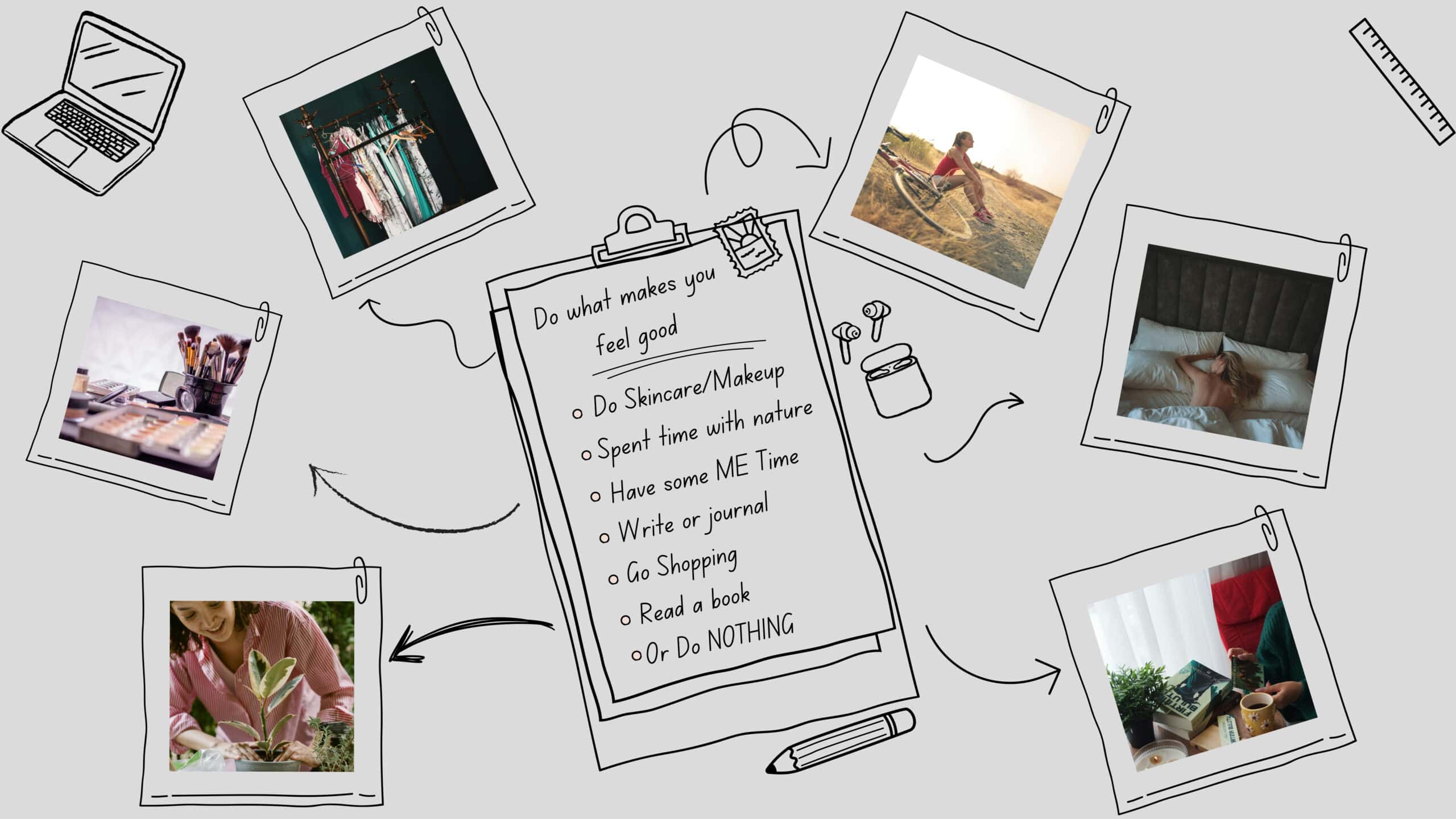
So don’t rush. Don’t punish yourself. And definitely don’t make impulsive decisions in the blur. Decisions made in emergency lighting rarely fit daylight. Do what soothes you—light a candle, walk in nature, let music hold you, talk to your journal, Ink is a quiet gym for clarity. stare at the ceiling. Whatever helps you not abandon yourself when the world feels distant. Because that’s the real test.
Are you there for you? Self-love isn’t spa days or curated selfies. It’s the refusal to desert yourself when it would be easiest to. Kindness to self is not soft; it’s stabilizing.
And when the fog does lift and it always does. You won’t measure the so-called “lost” time. You’ll measure the resilience you built by surviving it. You’ll know you can walk through paralysis, through shame spirals, through lack of clarity and still return to yourself.
Let me take a leave by giving you a survival gospel: nothing in life is wasted if you can see the silver lining behind it.
When a car makes it home through thick fog, nobody curses the time it took. They sigh in relief because they arrived intact. The same is true of you. You’ll look back and realize the fog didn’t delay your story; it trained you to trust your steps when you couldn’t see the road.
“What looks like wasted time is often the workshop of your becoming”







EMOTIONS
