Feeling stuck in life because you can’t move forward?
The way we talk about feeling stuck in life is usually wrong. In a culture where constant movement is proof of ambition, not moving becomes a character flaw. When people talk about being stuck, they often jump straight to conclusions and that’s where the panic begins. Because if you really wanted it, you’d be doing something about it by now. It’s a very confident story, for how little it explains. Right?
Something more specific is happening. You can want more. Think about it constantly. And still not move. Which is exactly the part that makes it feel embarrassing because desire was supposed to solve this.
What you’re experiencing isn’t a personal failure. It’s a state that follows a pattern which has surprisingly little to do with desire and a lot to do with how our system responds around certain scenarios. So, what’s happening inside the system that movement stopped?
Brain Decides That Safety Comes Before Movement
Before your mind ever thinks about fulfillment, ambition, or wanting more, it asks a simpler question. Is this safe?
That question runs quietly in the background whether you’re aware of it or not. The brain isn’t designed to optimize for growth. It’s designed to avoid errors, especially those that previously came with emotional cost. Growth is optional. Survival is not. That’s why disappointment leaves a deeper imprint than success.

The brain learns faster from loss than reward. When outcomes don’t match expectations, the system adjusts. It becomes cautious. And caution doesn’t feel like fear. It feels like hesitation.
That is why the system slows everything down which may look like inaction but from the inside, it’s responsibility. Which makes it very hard to argue with.
The problem is, our brains are great at identifying risks, but it can’t always reliably tell you what works. Confidence is not its strong suit here. I am sure you must be wondering the unanswered question: How the brain decides what counts as a risk in the first place?
Brain Uses the Past to Predict the Future
Your brain doesn’t experience the future as a blank slate. It predicts it. And to make those predictions the only primary data source is your past. Nothing ever truly expires in the system. Every choice you’ve made, every outcome that followed, every moment where something didn’t turn out the way you expected gets stored and reused automatically.
So when a new oppertunity appears, your brain instantly takes the reference of old failures. The brain usually ask, “Do you remember what happened last time?”
A very different question, with very different energy. If past choices carried emotional cost, the brain’s confidence drops. And action drops with it.
What happens to the signal that initiated the desire?
Desire Stops Feeling Like Reliable Guidance
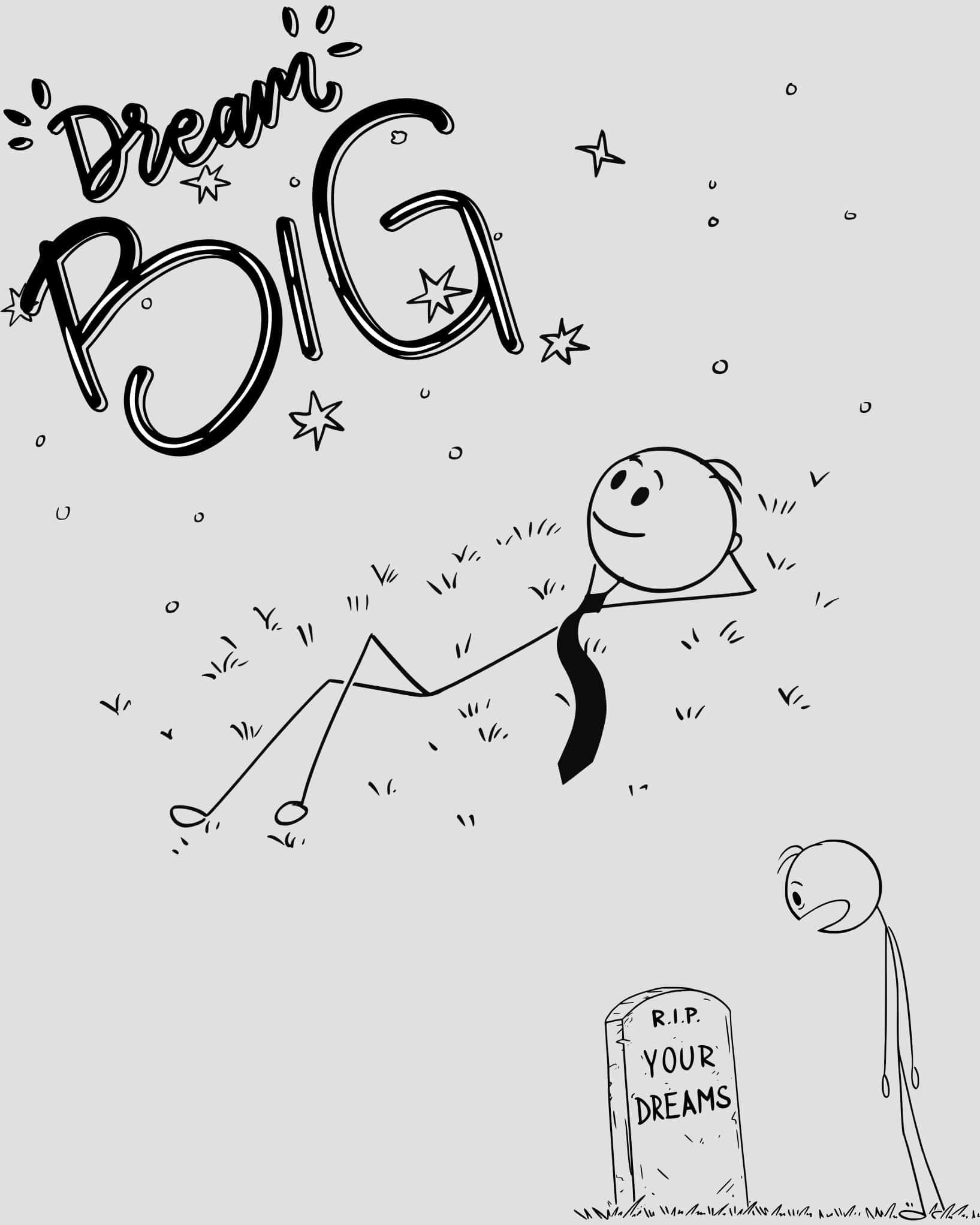
At first, desire feels like guidance. It pulls you forward. It gives direction. But when wanting something has repeatedly led to disappointment, the system starts associating desire with cost. Not emotionally. Logically.
Your brain begins treating desire the way it treats a warning sign. Last time you wanted this, it didn’t end well. So instead of desire being information, it becomes something to double-check.
This is when people start questioning the desire itself. And when you don’t trust your own signals, you start doubting yourself.
Not: Is this the right choice? But: Why do I want this in the first place?
Once desire becomes suspecious, movement becomes even harder and this is where it starts to feel personal. When the brain loses trust in its own signals, it pauses. Wanting something stops feeling energizing. It starts feeling irresponsible. Like you should know better by now.
So when wanting itself starts to feel like a liability, what kind of decision begins to feel wiser than moving forward?
Freezing Starts to Feel Like the Smart Choice
When safety becomes the priority, movement gets postponed as a function.
Here’s what makes this state so hard to interrupt: Psychologically, freeze often wears the costume of wisdom. And that’s why people stay in it longer than they realize.
Freeze doesn’t feel like fear. It often present itself as “needing more clarity.” As Especially after you’ve learned your lesson. Since you’re not rushing into bad decisions anymore. You tell yourself you’re thinking things through, waiting for the right sign, gathering more information. That sounds like growth. And honestly, it almost is.
But what’s actually happening is simpler: the system can’t confidently simulate a safe outcome— it delays. So, instead of choosing, it loops, runs scenarios, revisits old mistakes, scans for errors. Stillness feels better than cleaning up another mess. It makes a compelling case.
So if stillness feels safer than action, why does it feel so mentally exhausting instead of restful?
THINKING QUIETLY REPLACES ACTION
When the brain can’t confidently predict a safe outcome, it looks for another way to stay in control. That substitute is thinking. Much lower risk. Much higher mental workload. Thinking feels productive without being risky. It feels active without being exposed.
You’re not idle. You’re analyzing, researching, replaying conversations, imagining different futures. Psychologically, this makes sense. Action creates consequences. Thinking creates options.
This is why people say things like:
“I just need more clarity.”
“I’m not ready yet.”
“I’m still figuring it out.”
All technically true. Those statements aren’t excuses. They’re accurate descriptions of what the system is doing.
But that’s the part most people don’t realize: thinking doesn’t let the system rest. Every option you consider keeps the nervous system activated. Every scenario you run keeps the threat system online. Every unanswered question leaves the loop open. So even though you’re not acting, your system is still working.
Because the system is constantly calculating, not resting, mental exhaustion builds even without movement. Busy, but not productive. A classic.
That’s why this state feels so draining.
The problem is that thinking and action use different mechanisms and thinking can easily masquerade as progress. It looks busy enough to pass. Thinking offers the illusion of control. Action requires accepting uncertainty. So when uncertainty feels intolerable, thinking quietly takes over and the system stays switched on, waiting for a certainty that never quite arrives.
It was designed for protection, not for living.
And once you see that, “Why can’t I move?” stops being the right question.
The real question is whether safety is still worth the cost.