The Descent Underground: The Unspoken Psychology of Growing Apart
Be honest, babe. When was the last time you looked at someone you love and thought, “God, I can’t stand you right now — and I don’t even know why”?
Of course, no one says that out loud. We smile, we nod, we play our roles like extras in our own romance movie. But deep down? Something is quietly snapping — not like a thunderclap, more like the heel of your favorite stiletto giving out mid-walk.
The internet will hand you the usual suspects: poor communication, mismatched priorities, falling out of connection. Cute. Digestible. Perfect for a Pinterest quote board. But let’s not kid ourselves — the psychology of growing apart is rarely that polite.
What really happens are the things no one warns you about in premarital counseling. The fractures you don’t admit to your best friend, the ones that don’t show up in Instagram reels. They don’t start with slammed doors. They start with silence. With the kind of cracks you don’t hear until they’ve already spread across the glass.
If you’ve read my earlier piece, you’ll remember the “ghosts” that haunt relationships. If not, darling, no panic — this is a good entry point. Think of this chapter as peeling back the floorboards. Ghosts explain the shadows. I call it THE WAR NO ONE NAMED.
Here, we’re looking at the machinery underneath.
What I’ve learned is love rarely unravels in explosions. It unravels in quiet, clockwork ways. People are messy, insecure, blind to their own patterns — and yet heartbreak, when it comes, always feels eerily predictable.
This chapter isn’t about clichés. It’s about the brutal, rarely named mechanics that explain why couples drift apart — even when nobody cheats, nobody screams, and nobody leaves. The kind of break that doesn’t make headlines, but still takes your breath away.
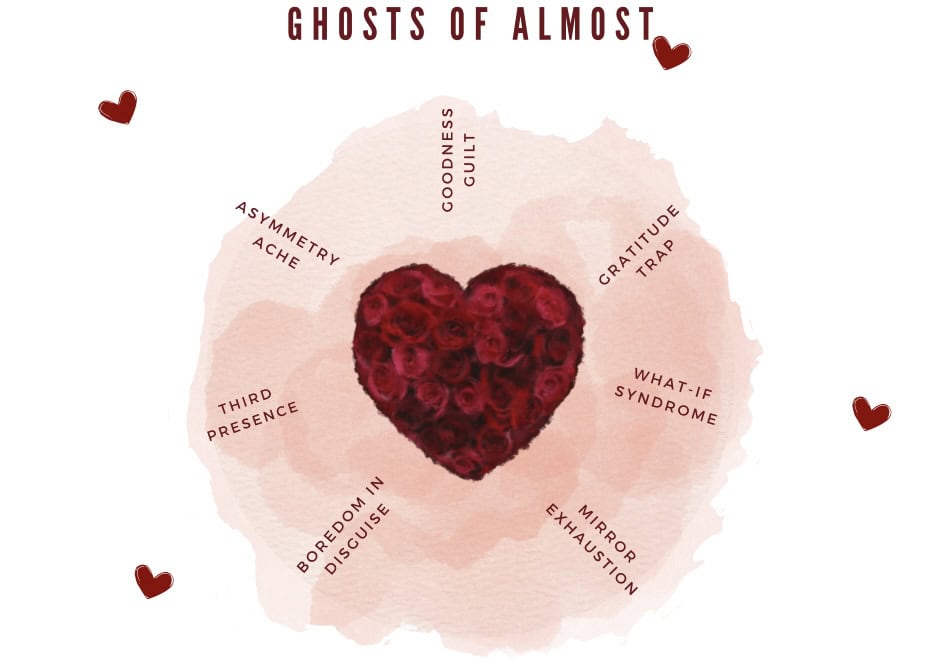
Mirror Exhaustion in Relationships: Self-Discrepancy and Attachment Triggers
Think of it this way: In the beginning, ambition is sexy. “He’s so driven, I love how focused he is.” Later? “Cool, but am I dating a man or his Google Calendar?”
At first, her organizational skills make you swoon. “She keeps me grounded.” Later? “Why does a sock on the chair feel like a felony?”
We all say we want “unconditional love,” don’t we? But let’s be honest — most of us don’t. What we actually crave is love that flatters, like the perfect lighting in a selfie. The Instagram-worthy version of ourselves. The witty, stylish, lovable self. The version we like being mirrored back.
At first, that mirroring feels intoxicating. He laughs like you, borrows your slang, even copies your coffee order. Finally — someone gets you. But give it a few years, and suddenly the mirroring starts to feel like surveillance. Do I even get to breathe without a commentary track now?
That’s the cruel trick of the mirror. Love reflects all of you — not just the curated highlight reel, but also the messy, insecure, unpolished parts you thought you’d buried.
And here’s where psychology slips in like a heel on a slick floor:
Self-Discrepancy Theory says we unravel when the “actual self” our partner mirrors doesn’t match the “ideal self” we want to see. It’s like trying on jeans in your “goal size” — instant recoil.
Attachment Theory predicts the fallout: anxious partners cling tighter, avoidant partners withdraw like it’s an Olympic sport. Either way, the mirror stops feeling safe and starts feeling suffocating.
Spirituality isn’t kinder. It calls this mirror energy — when lovers don’t just reflect quirks but expose unhealed wounds. They surface karmic loops you thought you’d hidden under yoga mats and vision boards. The mirror is supposed to trigger growth. But if one of you resists? It triggers exhaustion instead.
Here’s the kicker, darling: maybe the problem isn’t that they stopped loving you. Maybe the problem is that you stopped loving the version of yourself they bring out.
Invisible Ledgers: Silent Scorekeeping and Reciprocity in Love

Love pretends to erase ledgers, but really, it just hides them. We throw a chic tablecloth over the scorecard and tell ourselves it doesn’t exist. But our bodies always know. Neuroscience shows unfairness lights up the same pain centers as a physical injury. That’s why being the one who “cares more” feels like getting sucker-punched in the chest — all while you’re still smiling at brunch.
Textbooks call this the norm of reciprocity — the unspoken rule that relationships survive on balanced exchange. And like any overdrafted account, once you’re in the red, resentment piles up with compound interest. John Gottman dresses it up as the emotional bank account: little deposits of care (a soft apology, a surprise coffee, a thoughtful text) build credit. Neglect, silence, or indifference drain it.
Aristotle himself argued that justice means “giving each their due” — but humans are terrible accountants. We exaggerate what we’ve given, minimize what we’ve received, and seethe at the imbalance. That’s why the line “I gave you everything” echoes so bitterly in breakups. Because it’s never just about love — it’s about unpaid debt.
Fragility of Ease: How Comfort Can Quietly Kill Desire
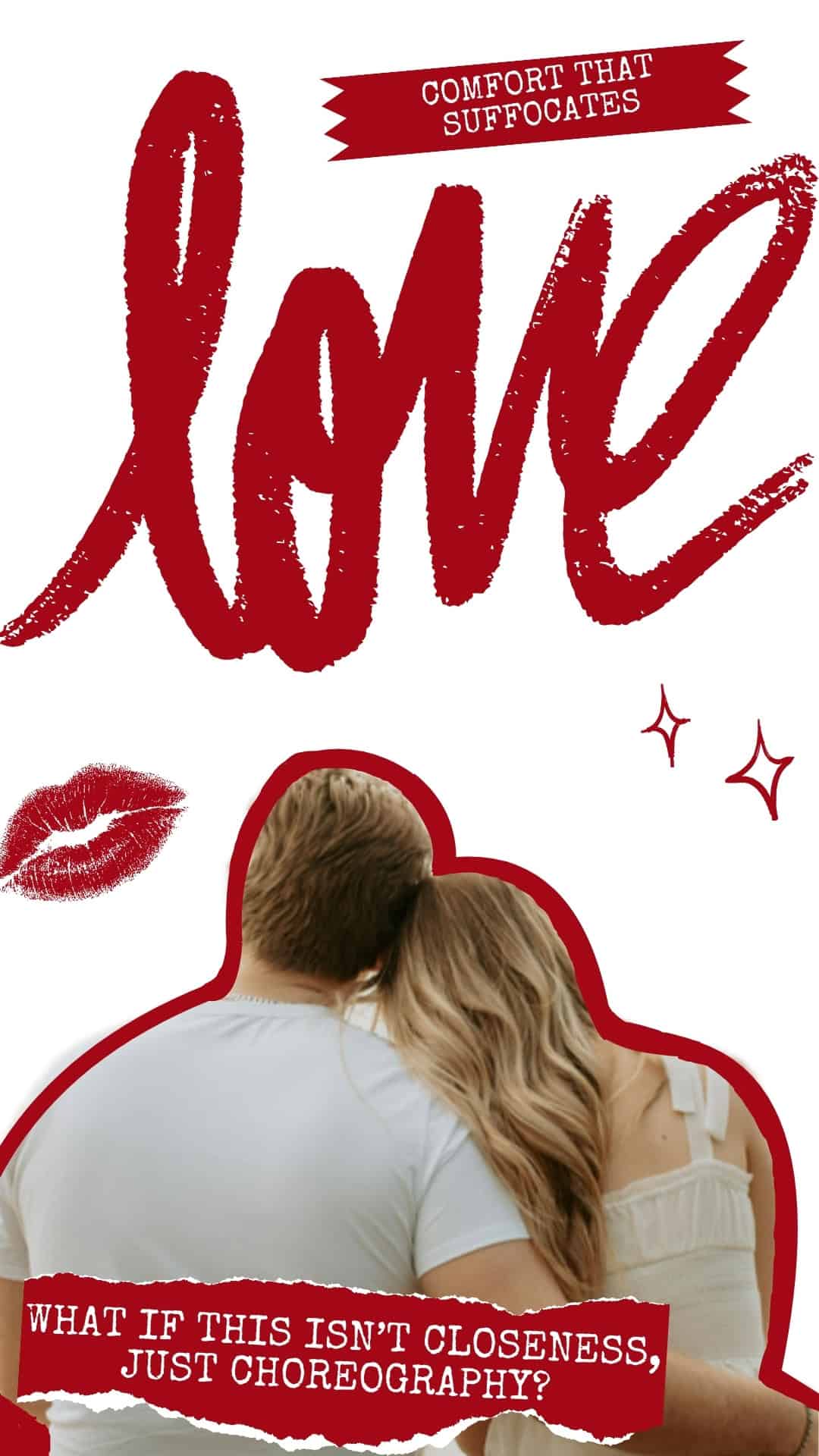
Remember the beginning? When every little effort felt electric — cooking dinner together, staying up too late just to talk, planning trips that maxed out your credit card but felt worth it anyway. Every moment was a thrill because it was new, because it was effort, because it was alive.
But now? The edges have dulled. One of you stopped trying. Not because you stopped caring — but because you didn’t need to anymore. The surprises faded. The late-night calls became routine. The spark quietly folded itself into the comfort of autopilot, like a party that’s gone from champagne to flat soda.
Here’s the paradox: we all swear we want ease. The kind of love where you can finally relax, breathe, and say, “Thank God, no drama.” But what makes life easy doesn’t always make life interesting. And ease is fragile. Too much of it, and the bond stagnates.
Textbooks call this hedonic adaptation in relationships — our brains normalize pleasure until what once thrilled us becomes wallpaper. The late-night texts that once made your heart race now feel like just another notification. The surprise date now feels like an obligation. Desire fades, not because love disappears, but because novelty does.
Comfort soothes us. But it doesn’t always bind us. Struggles bond us. Survival bonds us. Even shared chaos bonds us. Couples often feel closest after weathering storms together, not Netflixing in silence on the same couch. So what feels like calm can actually be disconnection in disguise. Without friction, there’s nothing to push against. Without storms, there’s nothing to cling tighter to.
That’s the cruel paradox of love: the thing you once craved — stability, ease, comfort — can quietly become the very thing that kills desire. Just like that dress you once begged for, only to find it collecting dust in the back of your closet. Still beautiful, but no longer thrilling.
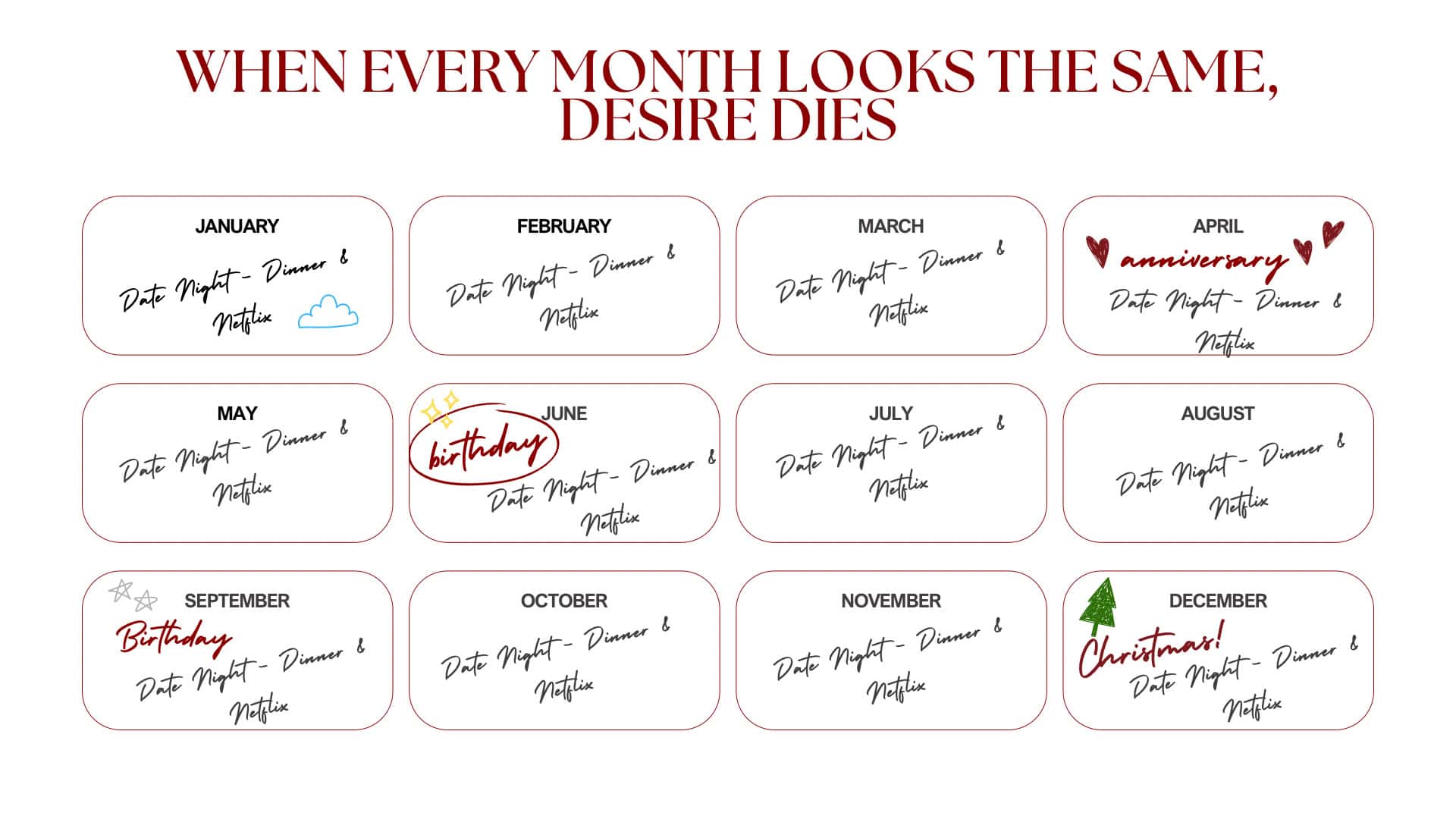
Death of Mystery: Why Predictability Destroys Attraction
Desire doesn’t live in stability. It lives in the unknown. At the start, every ding of their text tone flipped your stomach. Their weekend plans felt like secrets waiting to be unlocked. You didn’t know what they’d say next, or how the night would end — and that not knowing was intoxicating. Desire thrives in the same space as a wrapped gift: mystery.
Fast-forward, and now you can finish each other’s sentences. You’ve memorized their stories. You know exactly how they’ll react to a joke, a crisis, or the Wi-Fi going out. Predictability feels safe. But safe doesn’t always feel sexy.
Here’s the truth: love needs stability, but desire needs risk. When mystery dies, desire dies with it. Psychologists call this the uncertainty effect — the brain lights up harder for surprises than for guarantees. That dopamine rush of not knowing is what keeps passion alive. When everything becomes predictable, dopamine dips — and so does desire.
Couples confuse familiarity with closeness. But in reality, routine often masquerades as intimacy. You’re not “bonded” because you can guess their coffee order. You’re just on autopilot — like wearing the same perfume so often you stop smelling it yourself.
Esther Perel calls this the domestication of desire — the same safety and routine that make love feel secure slowly smother the mystery that makes it feel alive.
Kierkegaard warned us too: repetition comforts, but ultimately suffocates wonder.
Spiritually, mystery isn’t just foreplay — it’s the lifeblood of awe. Tantra teaches that keeping desire alive isn’t about sexual novelty alone, but about holding onto a sense of sacred otherness. The reminder that your partner isn’t fully yours to know, predict, or control.
And maybe that’s the sharpest heartbreak of all: not betrayal, not distance, but the quiet loss of awe. The day your partner stops feeling like a mystery is the day desire burns itself out — like a candle left too long, nothing left but melted wax.
Value-Identity Lag: When Growth Speeds Break Compatibility

Nobody warns you about this one. Even if love feels constant, the only constant we’ve ever known is change. And change, my dear, doesn’t care about your Pinterest wedding board.
One of you evolves. The other stalls. One is sprinting through therapy breakthroughs, promotions, spiritual awakenings. The other? Still circling the same cul-de-sac of comfort. And suddenly, what once felt like “compatibility” starts to feel like dead weight — like showing up to a gala in last year’s dress while your partner’s already wearing the new season.
Psychologists call this an identity mismatch in relationships — when two people’s developmental tasks or values evolve at different speeds.
Erikson mapped it out decades ago: intimacy, career, legacy, meaning. Everyone hits these milestones on their own timeline. And if your timelines don’t sync? The bond strains like a rubber band stretched too far.
It’s not a fight — it’s a lag. You’re not screaming at each other, you’re just… out of step. One’s Googling “career coaches,” the other’s Googling “how to get rid of fruit flies.” Same kitchen, different universes.
The slow walker feels judged. The runner feels dragged. Neither is “wrong.” But the mismatch hums like static, a low vibration that makes the room feel off even when no words are exchanged. Spiritually, this is called a frequency mismatch in love — two souls vibrating at different stages of growth.
Here’s the cruel twist: sometimes love collapses not from betrayal, but from velocity. The pace of evolution itself can tear people apart. You don’t have to scream, cheat, or lie. You just have to grow on different schedules. And that’s when the hardest truth lands: “I love you” can still be true, while “we’re aligned” isn’t.
Because we cling to permanence from beings built for impermanence. You won’t meet the same partner twice — not even if you sleep next to them every night. Love, like fashion, evolves in seasons. And sometimes the only tragedy is that you and your partner stop walking the runway at the same pace.
Collapse of Shared Myths: Narrative Identity and Relationship Drift
Every couple has a myth.
Our story. How we met. Why we fit. Where we’re going. It’s the invisible script that turns two “I’s” into a “we.” Chemistry might start the romance, but it’s the myth that keeps the curtain from falling.
But myths, like couture gowns, need maintenance. And life doesn’t exactly hand out dry-cleaning instructions. Jobs, bills, babies, therapy breakthroughs, midlife crises — they all tug at the seams until the story doesn’t fit anymore. What once was “We’ll travel the world together” quietly mutates into “One of us craves roots, the other craves airports.”

It’s called narrative identity theory in relationships — the idea that humans create meaning by telling stories about who we are and where we’re headed.
Relationships thrive when those stories overlap. They fracture when the plotlines diverge.
Think about it: You once shared a dream of family. Suddenly, one of you no longer wants kids. You built careers side by side. Now one burns out while the other climbs higher. You were in romance; now they’re in self-help. Different chapters. Sometimes different genres
Research backs it up: couples with a shared future script report greater resilience. When the script unravels, so does the resilience.
Spiritually, it’s like a broken soul contract — the myth loses its vibration, and the bond starts floating like a balloon no one’s holding anymore. And that’s the quiet tragedy.
Sometimes love doesn’t die first. The myth dies first. And once the myth collapses, love sits there — alive, but lost, with nowhere to go. Like a gown that still fits, technically, but no longer feels like you.
Frequency Mismatch in Love: Asynchronous Development and “Bad Vibes”
Have you ever sat across from someone you love and felt like you were in different worlds? Same dinner table, same candlelight, same wine — but the air between you buzzes with a strange static. The conversation that once flowed like champagne now clinks like flat soda.
Some call it “bad vibes.” Others call it “timing.” Psychology calls it asynchronous development in relationships. Spirituality calls it a frequency mismatch. Whatever the language, the ache is the same: you’re no longer moving at the same rhythm.
One of you is in a building stage — hustling, stacking bricks, chasing goals. The other is in a slowing stage — craving roots, stability, quiet. Neither is wrong, but the mismatch rattles the connection like two songs playing in different keys.
It doesn’t look like a fight. It looks like mismatched searches in the same Wi-Fi history: one’s Googling “career coaches,” the other “best soil for indoor plants.” Same roof, different timelines.
When frequencies align, love feels effortless. Conversation feels like music, intimacy like rhythm. But when frequencies split, the music turns to noise. Like a playlist that keeps skipping between Beyoncé and Bach — both brilliant, but not built for the same dance floor.
Spiritually, it’s no different. When one energy ascends and the other resists, the hum turns into static. Love stops feeling like home and starts feeling like background interference.
And maybe that’s the cruelest kind of growing apart. Not boredom. Not betrayal. Not even neglect. Just… timing. Just frequency. Just two hearts still beating beautifully, but no longer in sync.
The Fragile Truth: Why Love and Relationships Are Never Permanent

We worship love like it’s supposed to be permanent. We build vows, rings, fairy tales, and entire cultures on the fantasy that two evolving humans should stay aligned forever.
But biology, psychology — and frankly, common sense — tell a different story. Every cell in your body is programmed to change. Every thought rewires your brain. Every experience reshapes who you’re becoming. You don’t stand still. You never have. So why do we expect love to?
Here’s the blunt truth: love is not a promise. Love is a moment of alignment. Two evolving systems briefly vibrating in sync. Sometimes that alignment lasts decades. Sometimes months. Sometimes only a season. But it’s never guaranteed by sheer willpower, pretty vows, or the “we’ll make it work” mantra. We call it heartbreak when alignment ends.
But really, it’s just physics: systems diverge, frequencies shift, the math stops balancing. Love doesn’t always die in explosions — sometimes it just drifts away, like tabs you forgot you left open.
And here’s the gut punch: fragility isn’t a flaw of love. It’s its very nature. You can mean forever in one season and be unable to carry it into the next. You can love someone fiercely and still outgrow them. That’s not failure. That’s growth.
Psychologists would call this cognitive dissonance in love — holding onto the belief that love should be permanent while living in a world where it rarely is.
Philosophers frame it as the tragedy of impermanence. Spiritually, it’s the lesson of presence: love only ever exists in the now.
But here’s the hopeful twist: if you stop clinging to permanence and start tending to today, love actually stands a better chance of lasting. Forget grand gestures. What stretches love across seasons are the quiet, daily deposits — listening when they talk about their day, remembering the little things, reaching for their hand without thinking.
The hard truth isn’t that love ends. The hard truth is that love is always fragile. Always conditional on attention, effort, and the willingness to grow together. And if you really want to defy the odds? Stop worshiping forever. Start practicing presence. Because love, darling, is silk — beautiful, delicate, worth everything. But it only lasts when you remember to care for it.